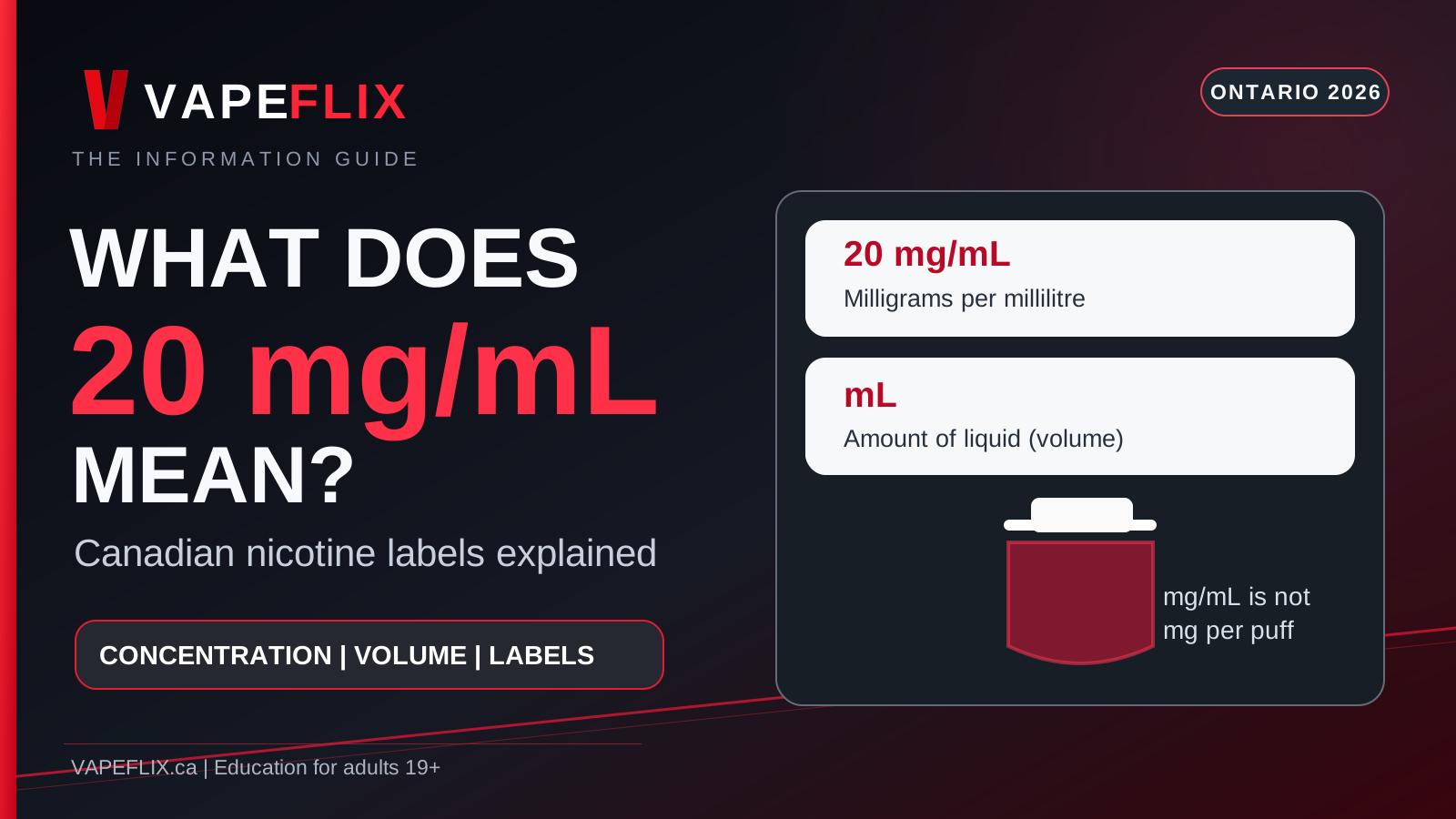
mg/mL measures concentration, not the amount absorbed
On a vaping-liquid label, mg/mL means milligrams of nicotine per millilitre of liquid. It is a concentration measurement. It is different from the total liquid volume, which is usually shown in millilitres (mL), and different again from the amount of nicotine a person might absorb. Actual exposure varies; the label alone cannot predict what enters a person's body.
For adult readers only. Nicotine is addictive, and vaping is not risk-free. This article is educational information, not a product recommendation or legal or medical advice. Youth and people who do not smoke should not vape.
Canada's federal nicotine-concentration limit
Under Canada's Nicotine Concentration in Vaping Products Regulations, vaping products manufactured or imported for sale are subject to a maximum nicotine concentration of 20 mg/mL. The rules also restrict packaging and sales when the concentration stated on the package exceeds that maximum. This figure is a regulatory limit, not a recommended intake or a statement that a product is safe.
Official source: Health Canada: vaping products regulations.
How concentration differs from bottle or device volume
The nicotine concentration describes how concentrated the nicotine is within a given volume of liquid. The container volume describes how much liquid is present. Those are separate measurements. A larger liquid volume at the same concentration contains more total nicotine than a smaller volume, but neither label value establishes the amount an individual would inhale or absorb.
Does a puff count tell you nicotine concentration?
No. A manufacturer's advertised puff count is an estimate related to usage assumptions, not a substitute for a nicotine-concentration declaration. A product's apparent size or marketing label also cannot independently establish that its ingredients, packaging and nicotine concentration meet Canadian requirements.
What else should a Canadian label tell you?
Health Canada sets rules for packaging and labelling, including required health warnings, nicotine statements, hazard information and other information where applicable. Legal vaping products must meet relevant federal requirements. A container may be child-resistant, but that does not make it child-proof, and nicotine-containing liquid must be kept securely away from children and pets.
Official source: Health Canada: vaping product safety.
Why a concentration label isn't a health-risk rating
Vaping can expose users to harmful substances, and nicotine can cause physical dependence. Health Canada advises that youth and adults who do not smoke should not vape. A legally labelled product is not necessarily harmless. People with questions about dependence, withdrawal or smoking cessation should seek evidence-based health information or speak with a qualified healthcare professional.
Read Health Canada: risks of vaping.
Frequently asked questions
Does 20 mg/mL mean 20 mg per puff?
No. It means 20 milligrams of nicotine per millilitre of liquid, not per inhalation.
Is 20 mg/mL a recommended nicotine concentration?
No. It is a maximum allowed under the applicable federal regulations, not an endorsement or health recommendation.
Can a legal nicotine concentration guarantee a product is safe?
No. Compliance with nicotine-concentration regulations does not eliminate the health risks of vaping.
Reviewed: November 2026. This information does not replace product-specific labelling or medical advice.
